
The Sun
The star that powers everything. Meet the Sun: a 4.6-billion-year-old ball of plasma that holds 99.8 percent of the solar system's mass and lights every world in it.
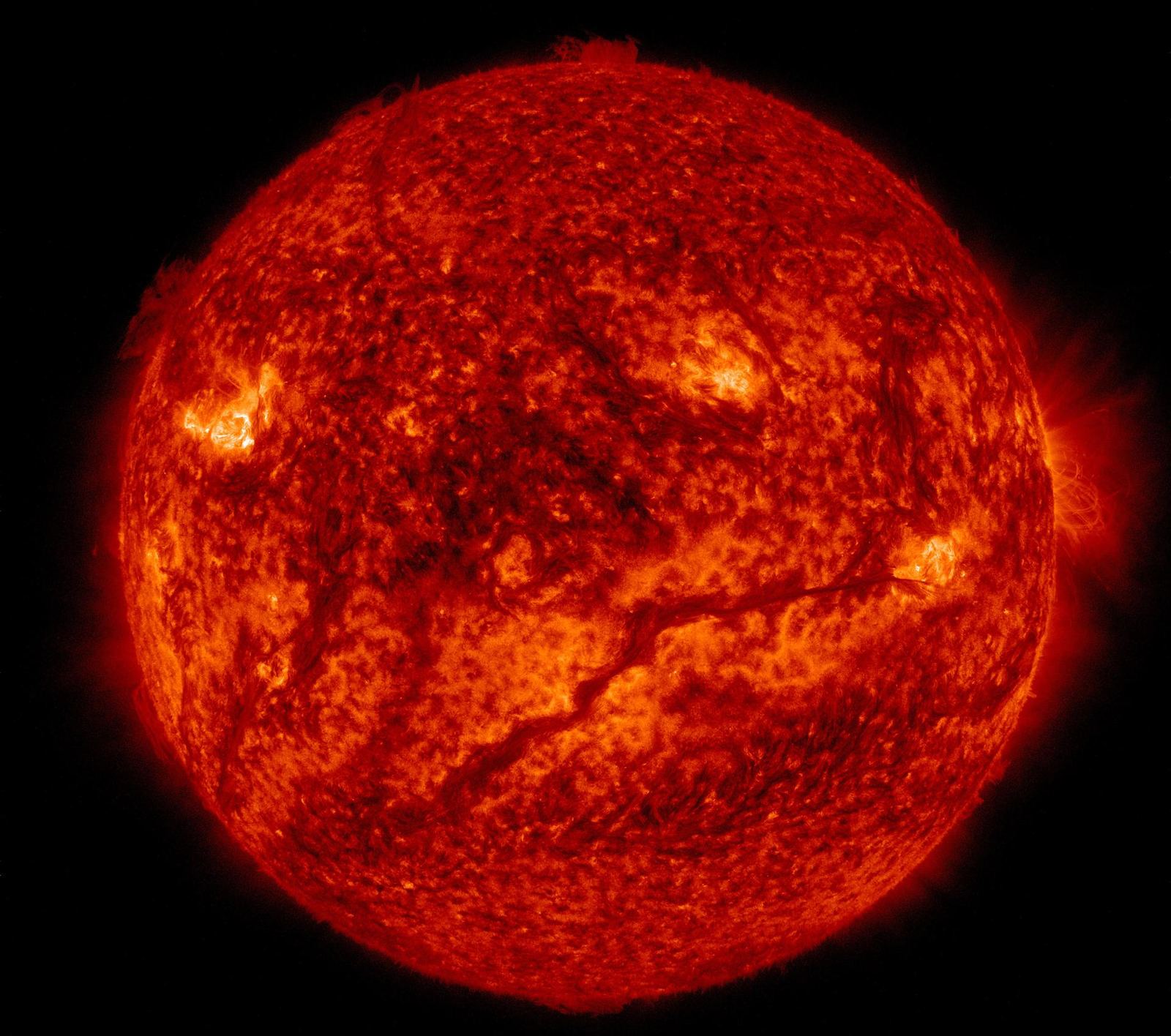
A giant filament on the Sun, seen by SDO: NASA/SDO, Public domain
A nuclear furnace in the sky
The Sun looks calm from Earth, a steady white disk that crosses the sky every day. Up close it is anything but. Deep in its core, where temperatures reach about 15 million °C, hydrogen nuclei are squeezed together so hard that they fuse into helium. Every second, that process turns millions of tonnes of matter into pure energy, which slowly works its way outward and finally escapes as the sunlight that warms our faces.
The Sun holds about 99.8 percent of all the mass in the solar system. Its gravity keeps everything from Mercury to the distant comets in orbit, and its light drives Earth's weather, oceans and almost every food chain on the planet.
Video: SDO: Year 7. Credit: NASA's Goddard Space Flight Center/SDO (source). NASA media; no endorsement implied.
Born from a collapsing cloud
About 4.6 billion years ago, a cold cloud of gas and dust began to collapse, possibly nudged by a nearby exploding star. Most of the material fell to the center and grew hot and dense enough to ignite fusion. The leftover dust spun into a flat disk, and that disk became the planets, moons and asteroids we know today. In a very real sense, every world in this guide is made of the Sun's leftovers.
Today the Sun is roughly halfway through its life as a stable star. In about five billion years it will swell into a red giant, then shed its outer layers and settle down as a small, slowly cooling white dwarf.
The Sun is far from unusual. It is one of hundreds of billions of stars in the Milky Way, orbiting the galaxy's center about 26,000 light-years away. What makes it special is simply that it is ours, and close enough to study in remarkable detail.
Storms that reach Earth
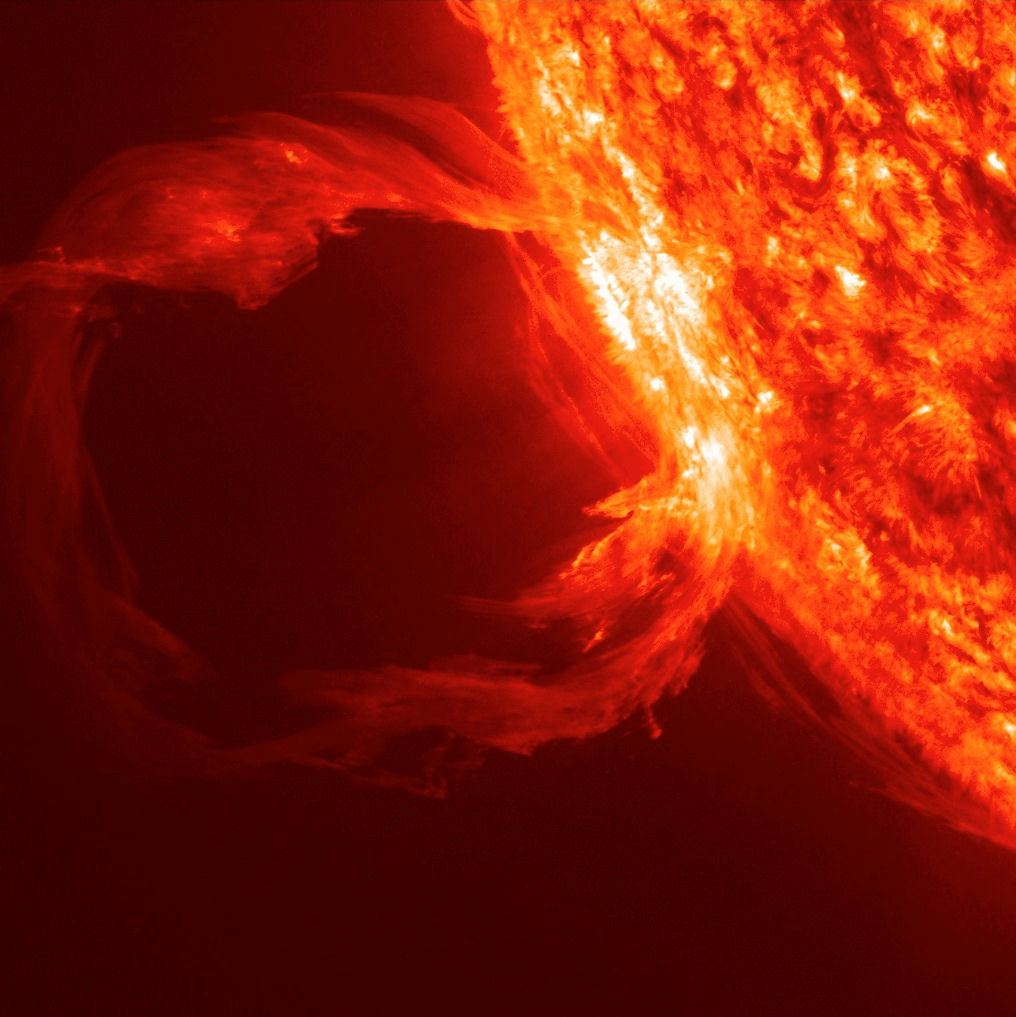
The Sun's surface is a boiling sea of plasma laced with twisted magnetic fields. Where those fields knot up, dark sunspots appear, and sudden releases of energy create solar flares and huge clouds of charged gas called coronal mass ejections. When one of those clouds hits Earth's magnetic field, it can spark brilliant auroras and, in strong cases, disturb satellites, radio signals and power grids.
The Sun's activity rises and falls on a cycle of about 11 years, swinging from quiet stretches with few sunspots to busy peaks full of flares.
Flying into the Sun's atmosphere
NASA's Solar Dynamics Observatory has watched the Sun almost nonstop since 2010, snapping images in many wavelengths every few seconds. In 2018 NASA launched Parker Solar Probe, which has since plunged through the Sun's outer atmosphere, the corona, closer than any spacecraft before it. On its closest passes it comes within about 6 million km of the surface and moves faster than any human-made object ever built.
One of the strangest puzzles it is helping to solve: the corona is hundreds of times hotter than the visible surface below it, reaching more than a million degrees. Scientists are still working out exactly how the Sun heats its own atmosphere.
Facts on this page were checked against these sources.
- A giant filament on the Sun, seen by SDO: NASA/SDO, Public domain
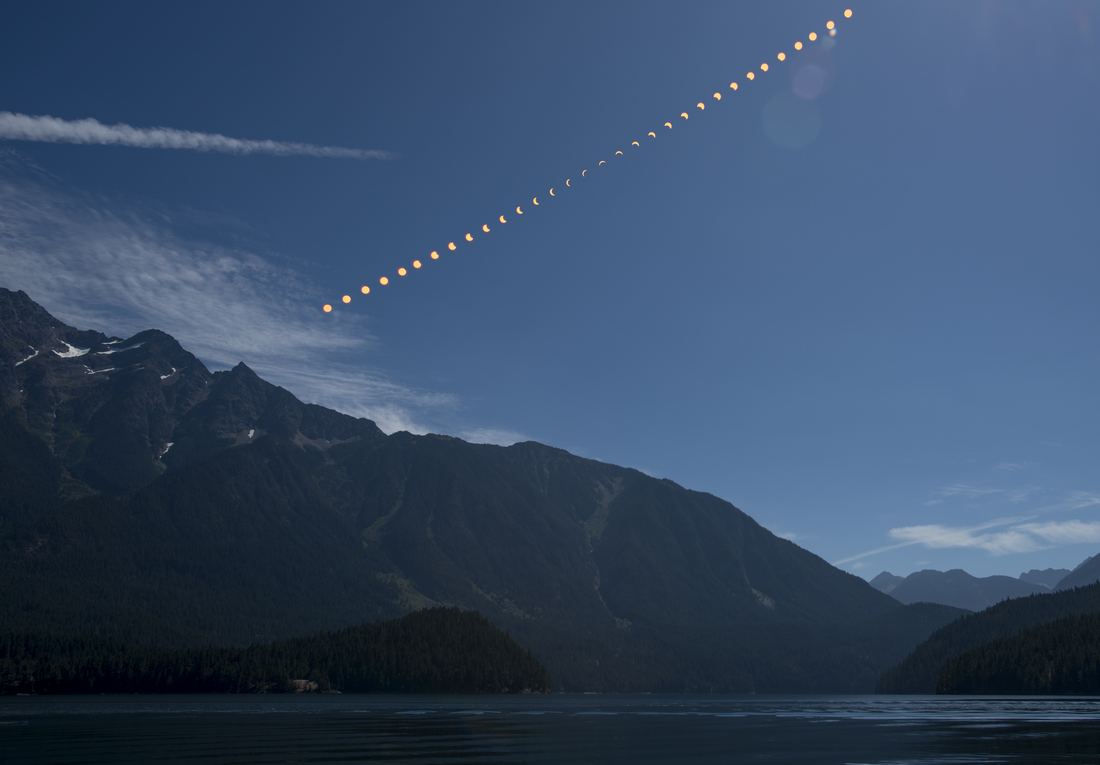
- The solar corona during the 2017 total eclipse: NASA/Bill Ingalls, Public domain
- An erupting prominence, March 30, 2010: NASA/GSFC/SDO, Public domain
- Video: SDO: Year 7, NASA's Goddard Space Flight Center/SDO, NASA (public domain)
Text written by Planetinio.



.jpg)